I began working with icons more than forty years ago, first as an apprentice in restoration and later as a professional involved in projects such as altar pieces and cupola paintings for churches. Alongside practical work, I explored the philosophical and theological dimensions of icon painting, which deepened my understanding of artistic form, style, and meaning.
The discipline and technical knowledge gained through icon painting have strongly influenced my approach to art in general. This experience has helped me recognize the spiritual and historical roots of many developments in European visual culture.
Working with icons has allowed me to better understand the visual language of different forms of art.
Traditional Icons
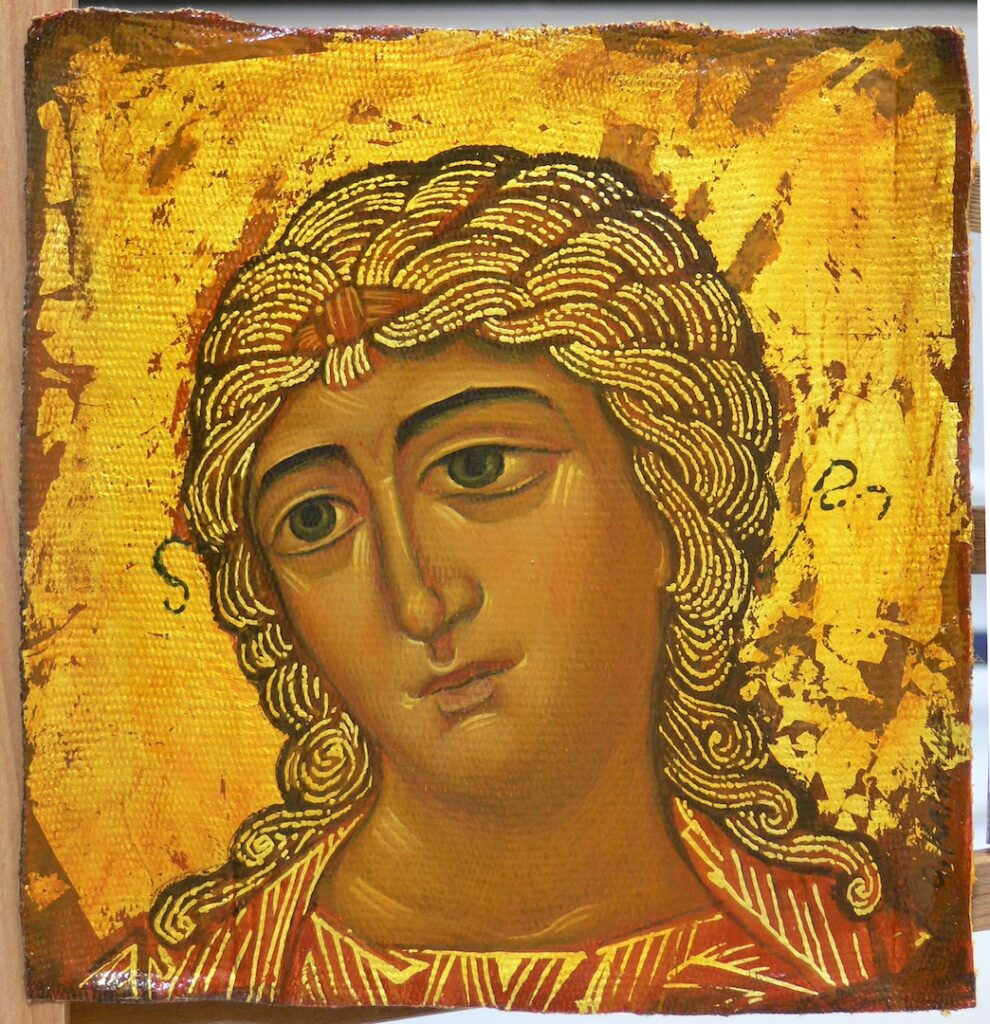
Angel with the golden hair.

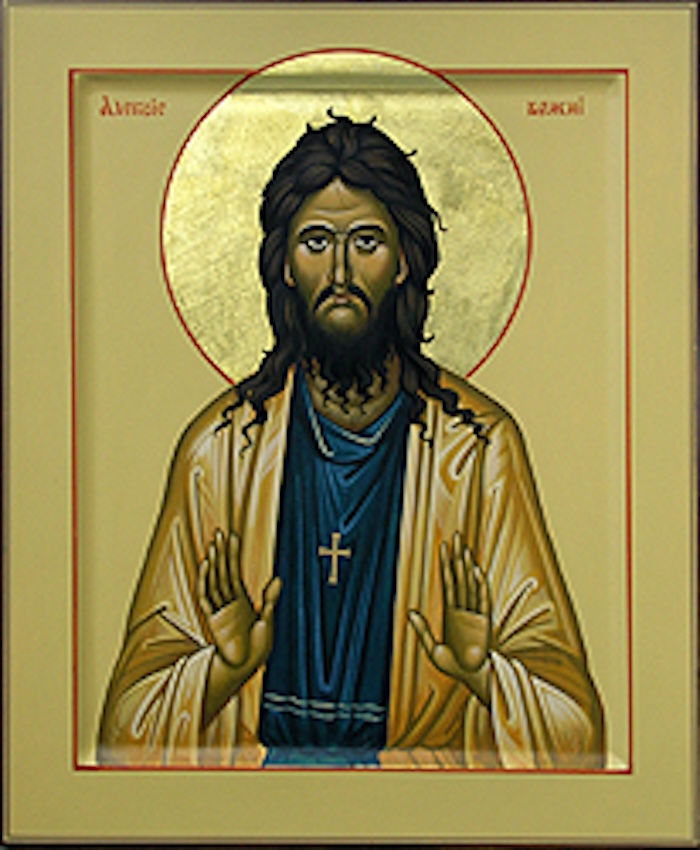
St. Patrick of Ireland.
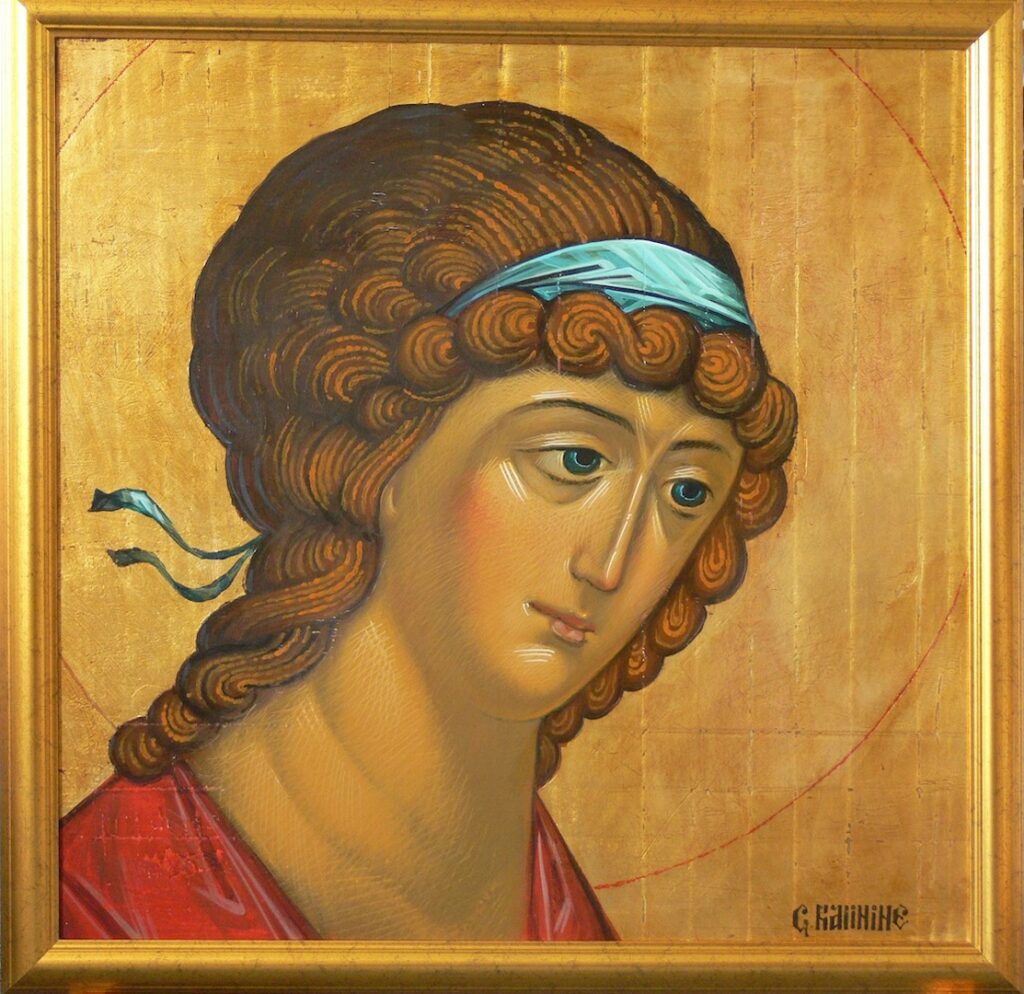
Archangel Michael.
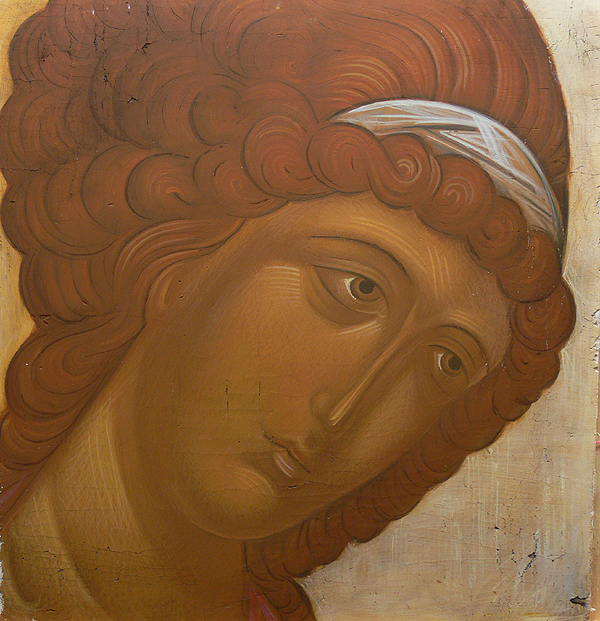
Archangel Michael.
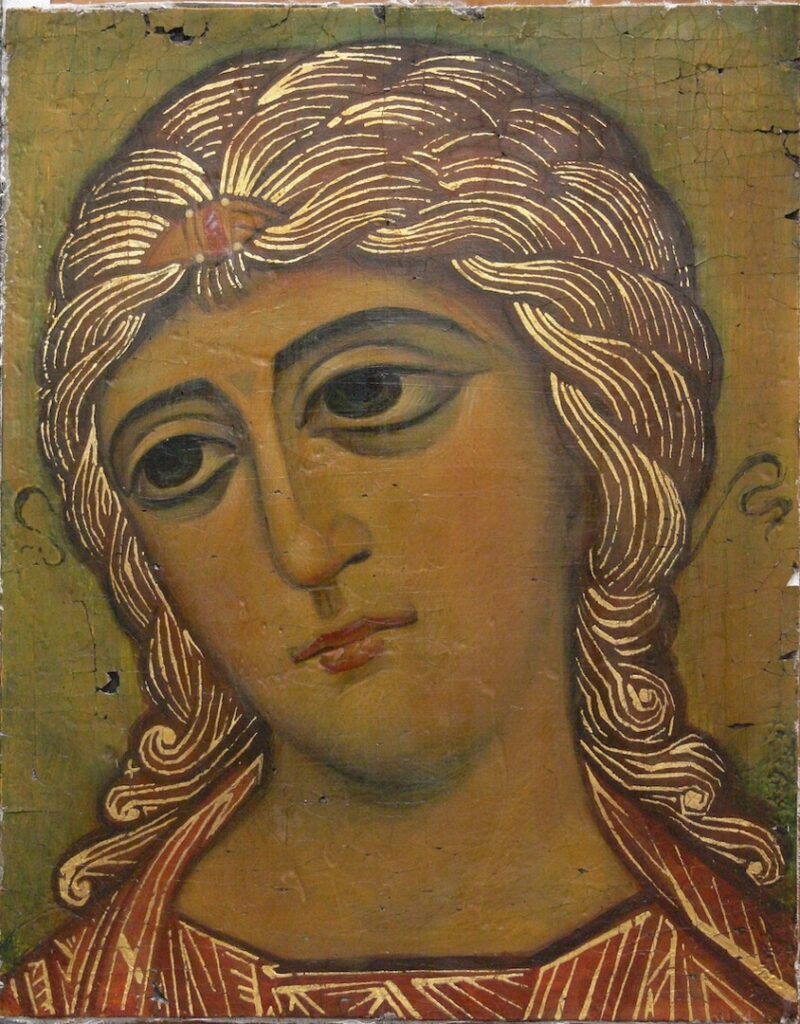
Angel with the golden hair.
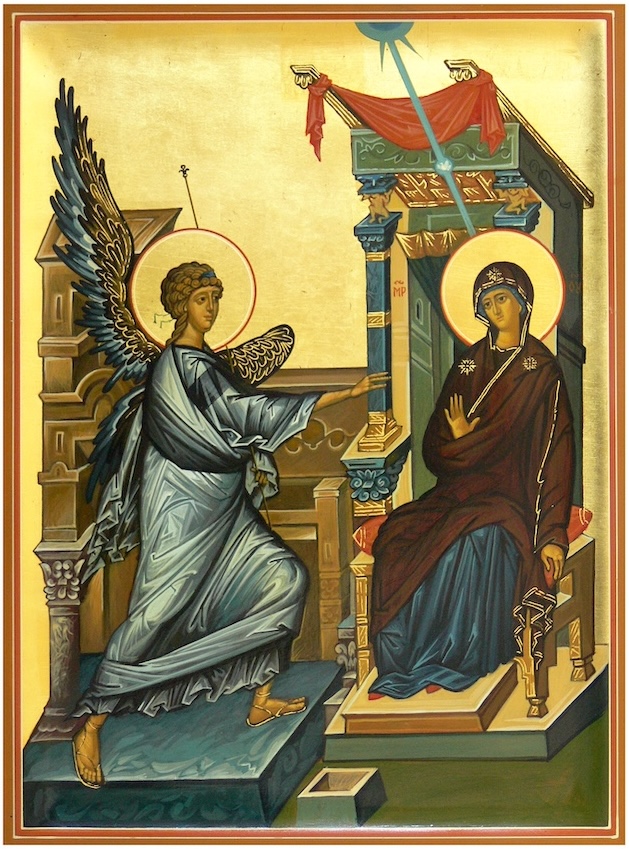
Annunciation.
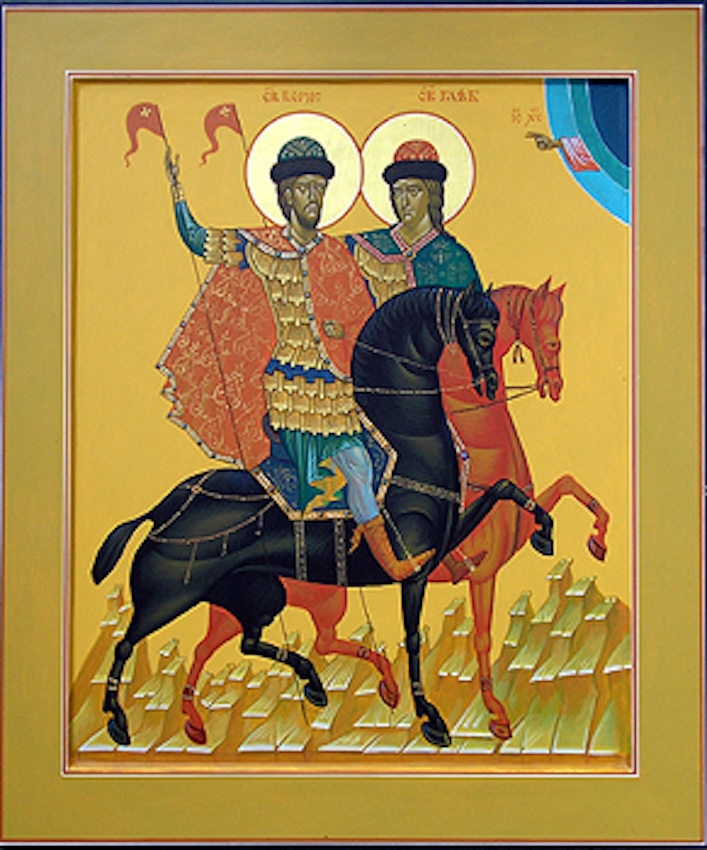
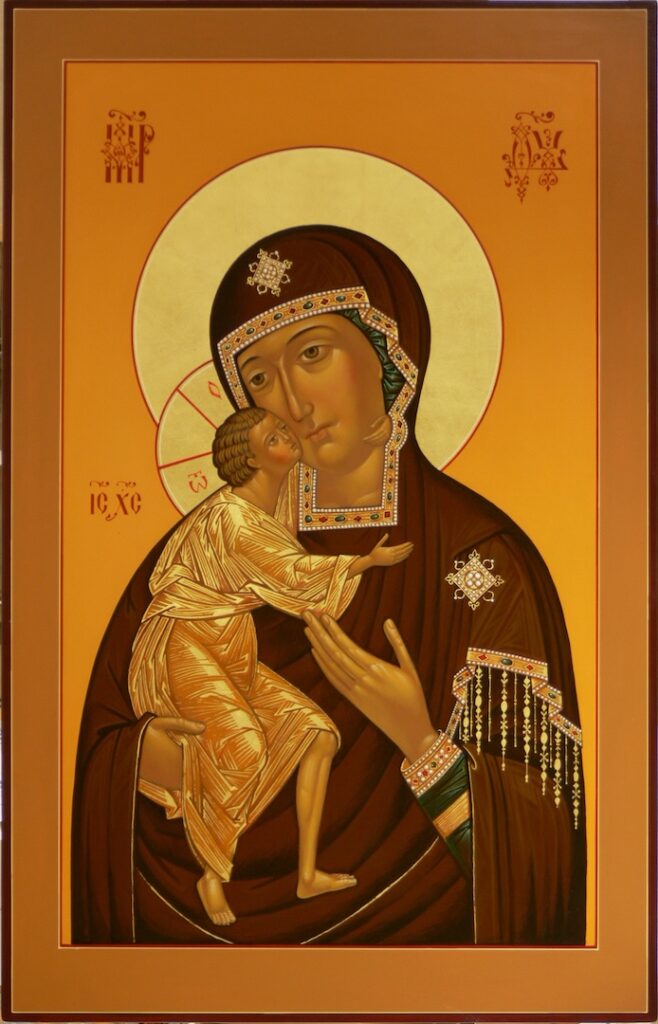
Mother of God. Fedorovskaja.
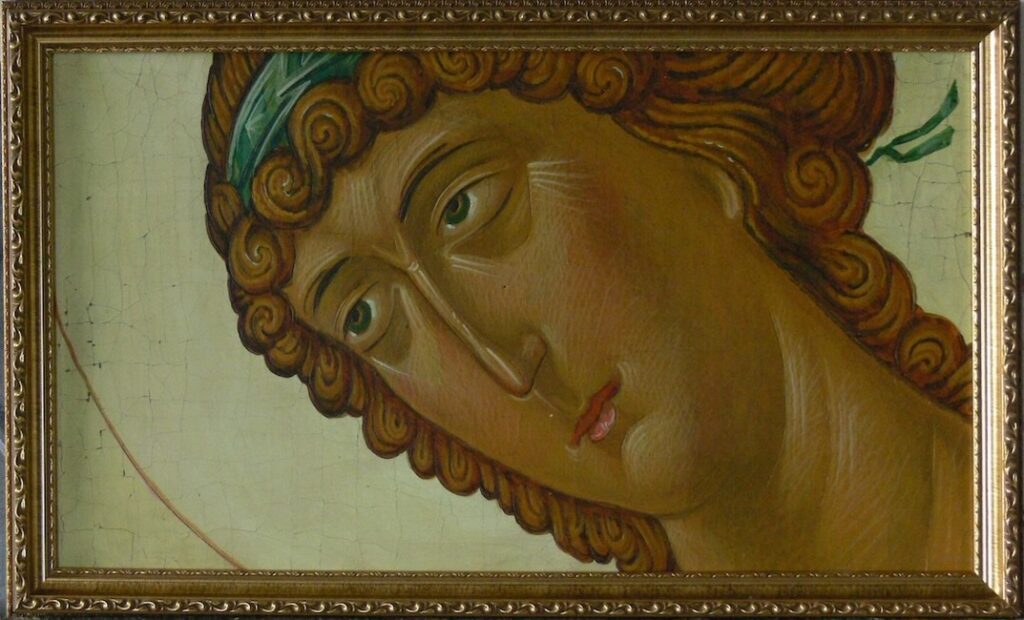
Archangel Gabriel.
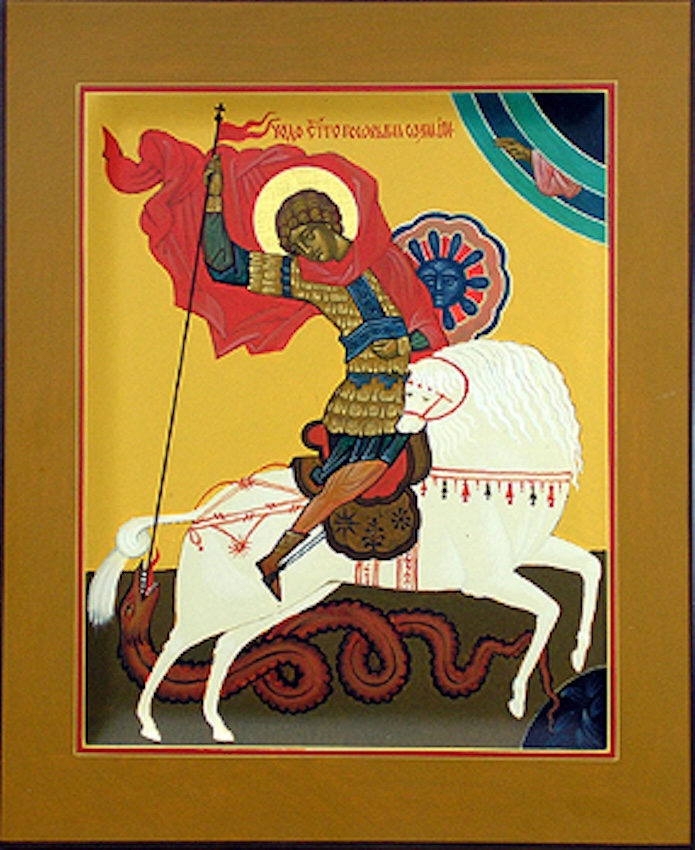
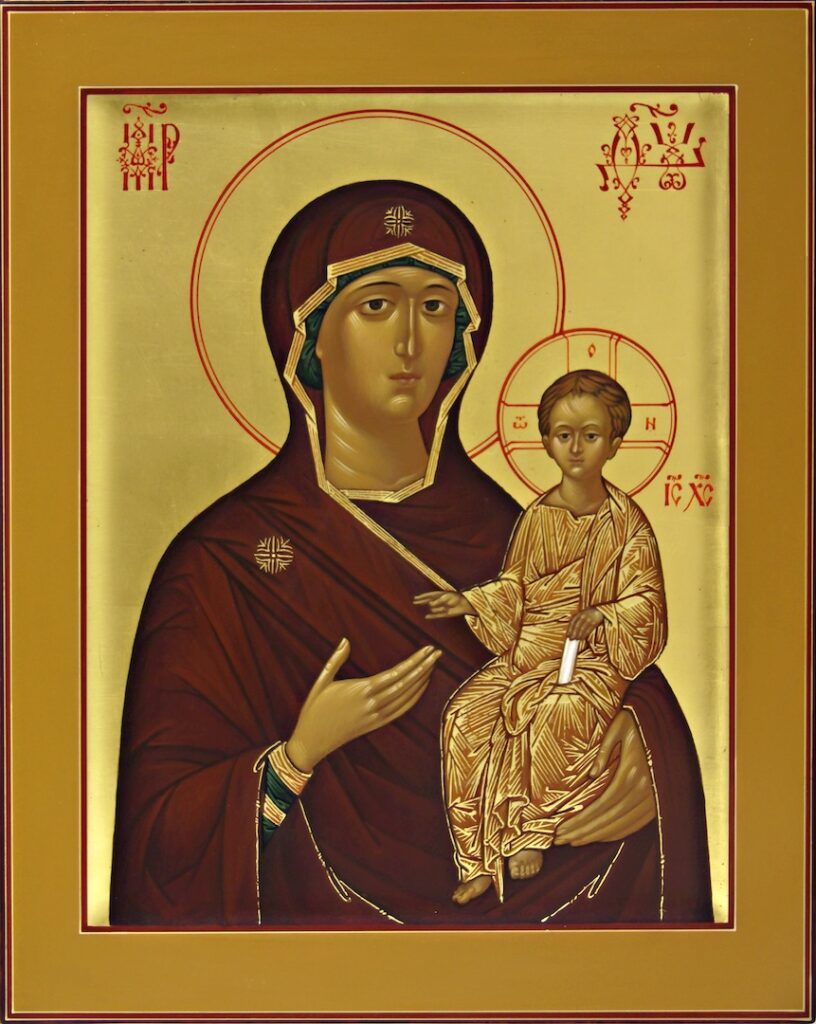
Mother of God. Hodegitria.
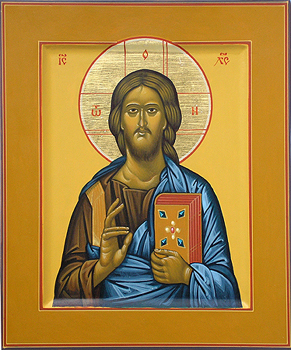
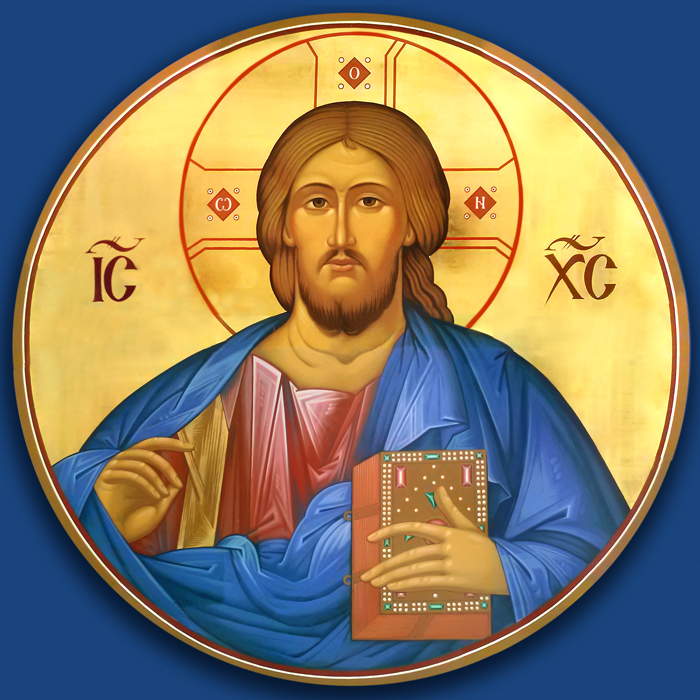
J. C. Pantocrator. The cupola of the church in Burlington.
Symbolic & Narrative Works


The Knight Angel and Death. Oil. Canvas.
Read more about this painting.
This painting was inspired by the famous engraving Knight, Death and the Devil by Albrecht Dürer. In his work, a resolute warrior advances toward his destiny, steadfast in his duty despite the presence of Death and the Devil—symbols of inevitability and temptation that follow him closely.
In my interpretation, I chose to shift that narrative. The Devil is replaced by an Angel—no longer a force of temptation, but a quiet presence of guidance and protection accompanying the Knight. This change transforms the journey from one of grim endurance into one of trust and inner strength.
I also introduced elements from my own surroundings, such as the Birks Clock in Hamilton. Its presence echoes the passing of time, recalling the hourglass in Dürer’s engraving, yet grounding the scene in a familiar, lived reality. Also, there are architectural and natural landscape elements such as the Post Office tower and the former Central Hotel in Dundas, as well as a view of Dundas Peak and the Escarpment. Altogether, these references root the composition in a specific place while expanding its symbolic meaning.
The path remains uncertain, but it is no longer walked alone.

Gardian Angel. Canvas. Acrylic.

The Sermon. Plaster panel. Acrylic.

The last Autumn of Millenium. Canvas. Acrylic.

Second coming. Oil. Canvas.

Madonna. After Andrea Mantegna. Acrylic on plaster panel, 16” x 20” 2025.
Read more about painting
Andrea Mantegna, an early master of the Italian Renaissance, has always impressed me with the strength of his drawing and his ability to render the human figure in space. This Madonna, at first glance, may appear simply as a portrait of a young woman with a child, yet it carries a profound structural presence characteristic of his work.
When I first encountered this image, I was struck by its sculptural, almost carved quality—the powerful three-dimensional rendering, the clarity of light and shadow, and above all, the quiet, thoughtful expression of the Madonna. My painting is not intended as a strict copy, but rather as a dialogue with the original.
I approached this work as a research project, using it to study and understand Mantegna’s techniques—his construction of form, his handling of light, and his restrained, earthy palette. Through the process of painting, I was able to engage directly with these methods in a way that observation alone cannot offer. The frame, which I also created, reflects the spirit of the period and completes the work as a unified object.
Working from the masters provides invaluable technical insight; it allows me to internalize their visual language and apply it more consciously in my own practice.
In learning the techniques of the past, I find new clarity in the way I see and paint today.